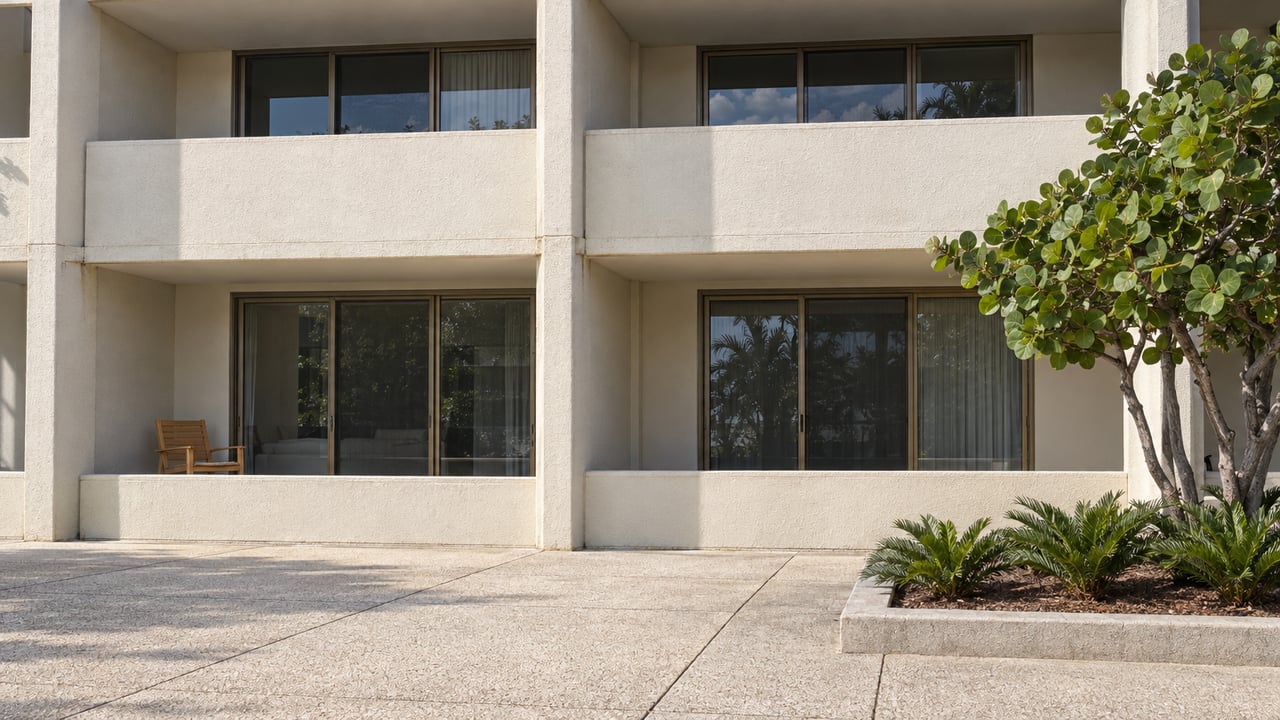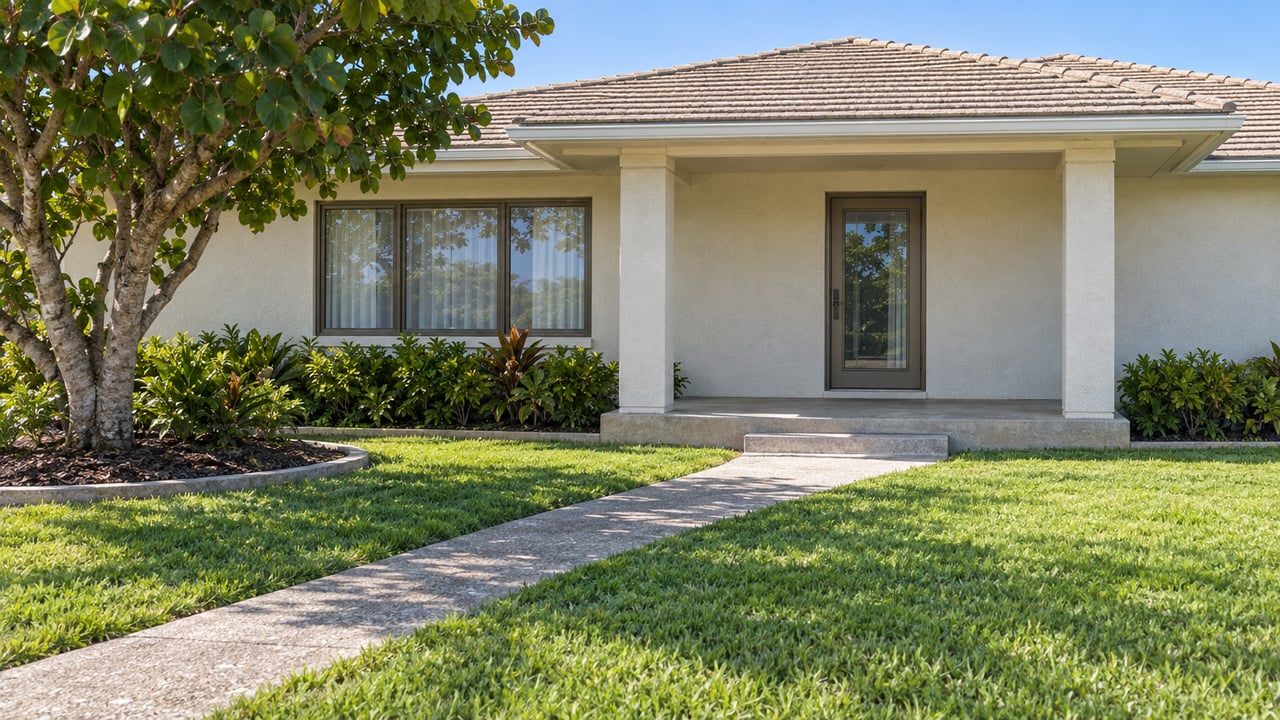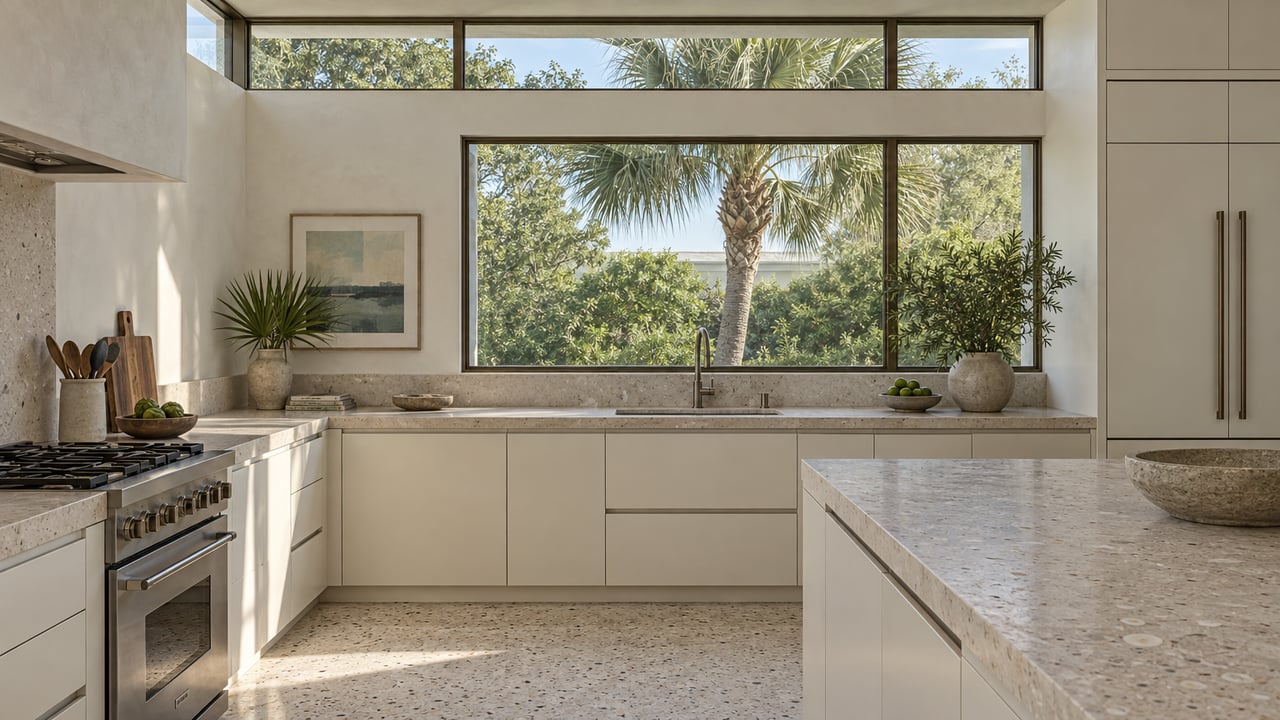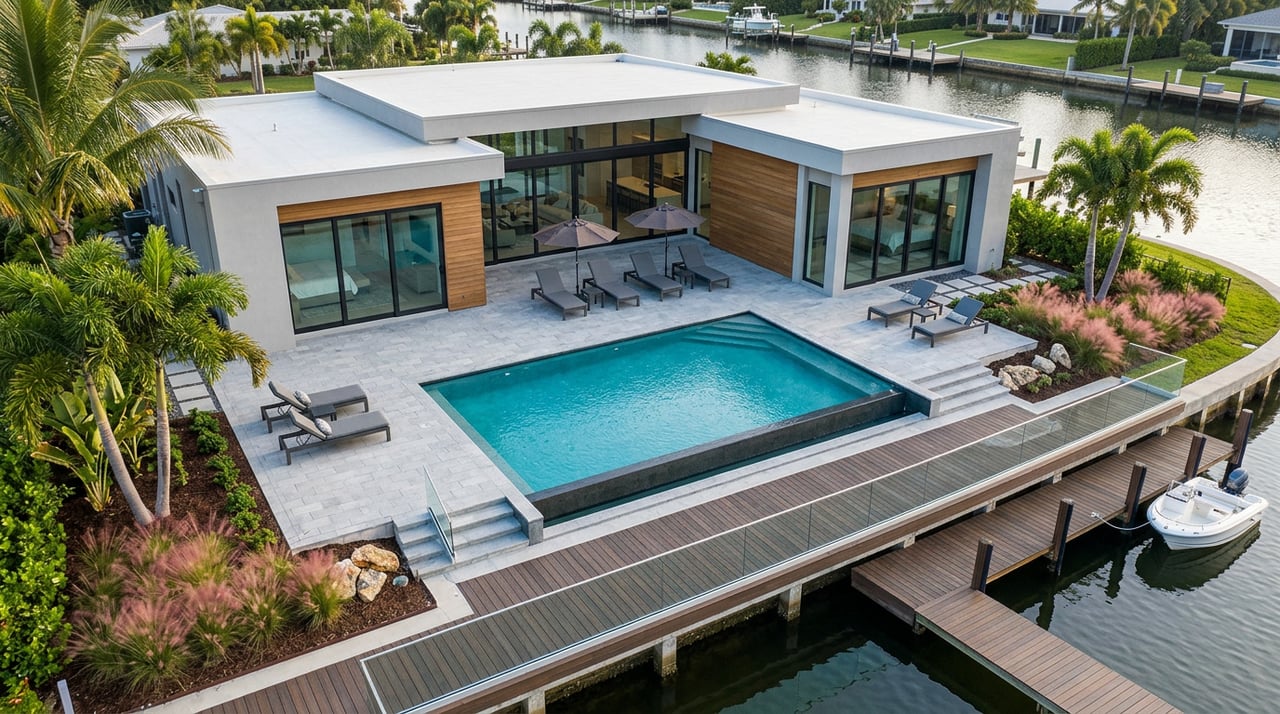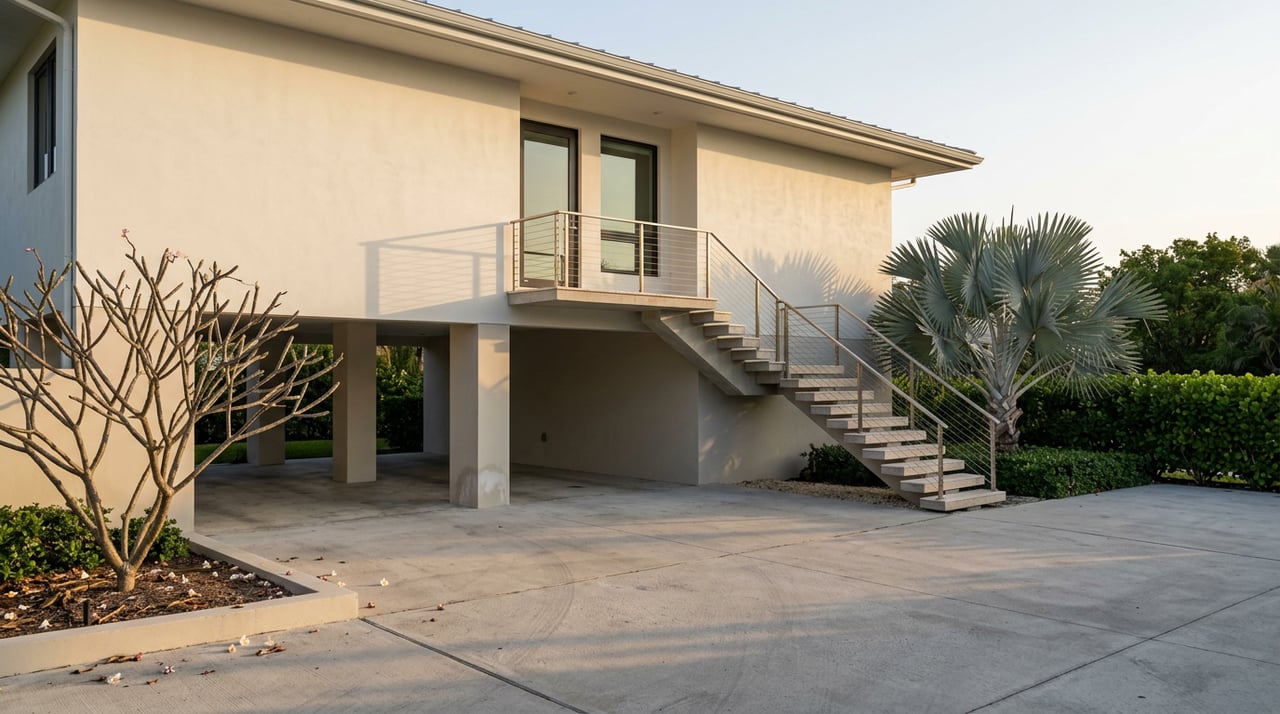
Two homes list a few doors apart on Bird Key this year, both on similar-sized canal lots, both a few minutes by water from Sarasota Bay. One is a 1960s ranch that has never been touched. The other is a two-story rebuild with floor-to-ceiling glass and a resort pool. The price gap between them runs into the millions, and a buyer scrolling portal listings without local context could easily read that gap as one seller being greedy and the other being realistic.
That read is wrong, and it is the single most common mistake buyers make when they start shopping this island. The two homes are not competing for the same dollar. They are two different products that happen to share a zip code, a causeway, and a listing category on the MLS.
A Lot That Hasn't Changed Since 1959, and a House That Has
Bird Key exists because a developer named Arvida dredged and filled roughly 250 acres of Sarasota Bay in 1959 and platted a fixed number of home sites, a total that sits at roughly 500 single-family lots today, with somewhere around 300 of them touching water. That count has barely moved in more than sixty years. Lot mergers happen occasionally at the top of the market, but they are the exception, not the strategy.
What has changed, repeatedly and dramatically, is what sits on those lots. Over the last decade, a meaningful share of the island's original 1960s ranches have come down to make way for elevated, code-current custom homes. The lot itself, its position on the water, its size, its bridge access, has stayed the same asset since Eisenhower was president. The structure on top of it is where all the price variation actually lives.
That is the first thing to understand before you look at a single listing: on Bird Key, you are almost always buying the lot first and the house second. A buyer who treats the two as one number is going to misjudge value in both directions, either overpaying for a teardown that reads like a house, or dismissing a genuine rebuild as overpriced against a ranch that is really trading as dirt.
The Split Hiding Inside the Median
If you have already gone looking for a Bird Key price, you've probably noticed the number doesn't hold still. One spring 2026 snapshot put the neighborhood's median list price near $3.87 million. A separate read taken weeks later put it closer to $4.7 million. Days on market showed up as 56 in one late-2025 read and 68 in a spring 2026 read. None of these sources are wrong. They are each sampling a market that is quietly two markets, and which one dominates a given snapshot depends on which bucket of homes happened to be listed that month.
The mechanism behind the split is mostly about elevation and code. Most Bird Key lots sit approximately 5 to 8 feet above sea level. Original construction from the 1960s is almost always non-elevated by current standards. Anything built or substantially rebuilt in the last two decades generally is elevated to meet current flood requirements.
That single variable, elevated or not, does more to explain a Bird Key price tag than square footage does. A rebuilt bayfront estate designed by architect Cliff Scholz and built by luxury builder Murray Homes sits at the top of what the island supports. An untouched ranch on a comparable canal lot, the kind that shows up in listings priced closer to land value, sits in an entirely different tier even though the lot underneath it might be nearly identical. One listing on Owl Way that came to market this summer priced near $2.99 million, a useful marker for what the more modest end of the island actually costs relative to the headline medians circulating for the neighborhood as a whole.
Insurance tracks the same divide. Combined wind, flood, and homeowners premiums on Sarasota waterfront property commonly run anywhere from $18,000 to $45,000 a year depending on flood zone and construction type. A non-elevated 1960s structure and a code-current rebuild on the same lot can carry very different numbers on that line, and it shows up in what a buyer can actually afford to carry once the purchase closes.
The Second Split Nobody Puts in the MLS Remarks
Elevation and construction vintage explain most of the spread between two homes on the same lot. But there's a second layer of variation that has nothing to do with the house at all, and it rarely appears in the listing description.
Not every piece of water around Bird Key is the same water. The island's canals and bayfront positions fall into three functionally different categories for anyone who actually wants to keep a boat there.
| Water type | Bridge access | Typical vessel capacity | Price range seen in 2026 listings |
|---|---|---|---|
| Bayfront, eastern edge | Unrestricted, open bay | Large sailboats and yachts | $8 million to $15 million and up |
| Sailboat canal | Deep water, no bridge restriction | Cruisers over roughly 50 feet | $4 million to $8 million |
| Garden canal | Fixed bridge, limited air draft | Runabouts and smaller pontoon boats | $3 million to $5 million |
The bridge is the detail that trips people up. The John Ringling Causeway, the fixed bridge connecting Sarasota to Bird Key and St. Armands, has a published closed vertical clearance of about 65 feet, which is generous compared to New Pass's bascule bridge closer to 23 feet. That causeway clearance matters for anyone heading out toward the Gulf. But it isn't the bridge that catches most buyers off guard. It's the smaller, fixed interior bridges on some of the island's own garden canals, the ones that cap a boat's air draft before it ever reaches open water. Two canal-front listings can carry nearly identical asking prices and still represent completely different boats, and that distinction almost never shows up in the MLS remarks. It shows up when you bring your actual vessel specs, draft and air draft and beam, to the dock and measure against the chart.
What This Means If You're Actually Comparing Listings
Once you know Bird Key is really running two overlapping divisions, ranch versus rebuild, and bayfront versus sailboat canal versus garden canal, the practical checklist writes itself:
- Confirm which bucket the price implies. If a listing is priced like land, verify the seawall, dock, and elevation math actually support a rebuild inside your budget and timeline. Coastal permitting and construction in Sarasota routinely take longer than buyers expect.
- If the price implies a finished estate, confirm you're paying for what that premium is supposed to buy: current code compliance, a standard insurance profile, and a dock and seawall that don't need immediate work.
- Bring your boat's draft, air draft, and beam before you fall in love with a dock. A canal that reads as "deep water" in a listing description can still sit behind a bridge that rules out your vessel.
- Ask for seawall and dock permit history, not just a visual condition report. Undocumented modifications can complicate insurance and resale later.
- Get insurance quotes early rather than after you're under contract. The $18,000 to $45,000 range on Sarasota waterfront properties is wide enough to change your monthly math significantly depending on flood zone and construction vintage.
The supply side adds urgency to all of this. In a typical month, only a handful of Bird Key's roughly 500 homes are actively listed. A buyer who has already sorted out which bucket and which water type fits their plan can move on the right listing within days. A buyer still comparing raw medians without that framework can end up waiting roughly six months for the next truly comparable property to surface.
On Bird Key, the address tells you the neighborhood. The lot and the bridge behind it tell you the price.
A Few Questions Worth Settling Before You Tour
Is a teardown actually cheaper than a finished home? Sometimes, but only after honest math on land, demolition, permitting, elevation, and construction, plus the cost of carrying the property through a full build cycle. The math works on the right lot. It rarely works on a lot that doesn't justify the effort.
Can you keep a boat on Bird Key without owning a waterfront lot? Yes. The Bird Key Yacht Club operates a 42-slip marina, and interior lot owners are generally eligible for membership and dock access through the club. That access is part of why interior lots on the island tend to hold their value relative to comparable non-waterfront neighborhoods elsewhere in Sarasota.
Does a higher asking price always mean a better boating lot? Not necessarily. Two similarly priced canal-front homes can sit behind different bridges with different air draft limits. The price tells you the tier. It doesn't tell you whether your specific boat fits until you check.
If you're weighing a Bird Key purchase, or trying to price a home you already own there against the right comparable set rather than a headline median, Harriet Stopher can walk through the specifics with you, from which bucket a listing actually belongs in to what the dock behind it can really accommodate. Request a complimentary home valuation or market consultation to get a read that goes past the portal number.
This article is general information, not legal, tax or financial advice. Consult a qualified professional about your situation.